
Personal Identity
Can Thought Experiments Solve Problems of Personal Identity?

Good physical experiments conform to the basic methodological standards of experimental design: they are objective, reliable, and valid. But is this also true of thought experiments? Especially problems of personal identity have engendered hypothetical scenarios that are very distant from the actual world. These imagined situations have been conspicuously ineffective at resolving conflicting intuitions and deciding between the different accounts of personal identity. Using prominent examples from the literature, I argue that this is due to many of these thought experiments not adhering to the methodological standards that guide experimental design in nearly all other disciplines. I also show how empirically unwarranted background assumptions about human physiology render some of the hypothetical scenarios that are employed in the debate about personal identity highly misleading.
Are Comatose People Still with Us?

When an individual is comatose while parts of her brain remain functional, the question arises as to whether any mental characteristics are still associated with this brain, that is, whether the person still exists. Settling this uncertainty requires that one becomes clear about two issues: the type of functional loss that is associated with the respective profile of brain damage and the persistence conditions of persons. Medical case studies can answer the former question, but they are not concerned with the latter. Conversely, in the philosophical literature, various accounts of personal identity are discussed, but usually detached from any empirical basis. Only uniting the two debates and interpreting the real-life configurations of brain damage through the lens of the philosophical concepts enables one to make an informed judgment regarding the persistence of comatose persons. Especially challenging are cases in which three mental characteristics that normally occur together – wakefulness, awareness and memory storage – come apart. These shall be the focus of this paper.
Can Memories Persist in dead People?

Lockean views of personal identity maintain that we are essentially persons who persist diachronically by virtue of being psychologically continuous with our former selves. In this article, I present a novel objection to this variant of psychological accounts, which is based on neurophysiological characteristics of the brain. While the mental states that constitute said psychological continuity reside in the cerebral hemispheres, so that for the former to persist only the upper brain must remain intact, being conscious additionally requires that a structure originating in the brainstem – the ascending reticular activating system – be functional. Hence, there can be situations in which even small brainstem lesions render individuals irreversibly comatose and thus forever preclude access to their mental states, while the neural correlates of the states themselves are retained. In these situations, Lockeans are forced to regard as fulfilled their criterion of diachronic persistence since psychological continuity, as they construe it, is not disrupted. Deeming an entity that is never again going to have any mental experiences to be a person, however, is an untenable position for a psychological account to adopt. In their current form, Lockean views of personal identity are therefore incompatible with human neurophysiology.
Applying ‘What Matters’ across Possible Worlds to Solve the Lucretian Puzzle

By appealing to the similarity between pre-vital and post-mortem nonexistence, Lucretius famously tried to show that our anxiety about death was irrational. His so-called Symmetry Argument has been attacked in various ways, but all of these strategies are themselves problematic. In this paper, I propose a new approach to undermining the argument: when Parfit’s distinction between identity and what matters is applied, not diachronically (as he uses it) but across possible worlds, the alleged symmetry can be broken. Although the pre-vital and posthumous time spans that we could have experienced are indeed analogous with respect to our identity, they are not analogous with respect to psychological continuity, which forms the basis of prudential concern. Lucretius even anticipated the Parfitian distinction. He did not, however, notice the significance that it has for his Symmetry Argument.
Personality Changes after brain stimulation
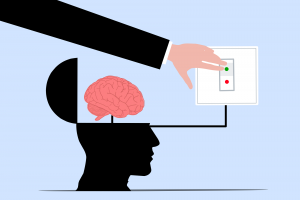
Zuk et al. (2023) examined researchers’ views on how deep brain stimulation may impact patients’ personality, mood, and behaviour (PMB). The team found that experts vary substantially in the notion of personality they employ. However, despite noting the lack of conceptual precision, no attempt was made at scientifically defining any of the involved concepts, so that the results of the different interviews remain largely incommensurable.
In this comment, I am doing the interpretative work that the authors should have undertaken following the descriptive part of the paper: first, disentangling the PMB cluster by defining what exactly constitutes personality, mood, and behaviour; and secondly, conceptualising the notion of personality change. I am arguing that what sets personality changes apart from other modifications is diachronic persistence.