
Brain Death, Coma & Consciouness
Is Brain Death Really Death?
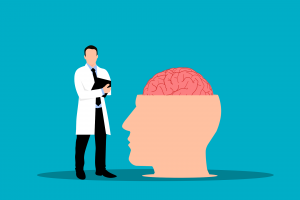
Fifty years have passed since brain death was first proposed as a criterion of death. Its advocates believe that with the destruction of the brain, integrated functioning ceases irreversibly, somatic unity dissolves, and the organism turns into a corpse. In this article, I put forward two objections against this assertion. First, I draw parallels between brain death and other pathological conditions and argue that whenever one regards the absence or the artificial replacement of a certain function in these pathological conditions as compatible with organismic unity, then one equally ought to tolerate that function’s loss or replacement in brain death. Second, I show that the neurological criterion faces an additional problem that is only coming to light as life-supporting technology improves: the growing sophistication of the latter gives rise to a dangerous decoupling of the actual performance of a vital function from the retention of neurological control over it. Half a century after its introduction, the neurological criterion is facing the same fate as its cardiopulmonary predecessor.
Are Comatose People Still with Us?
When an individual is comatose while parts of her brain remain functional, the question arises as to whether any mental characteristics are still associated with this brain, that is, whether the person still exists. Settling this uncertainty requires that one becomes clear about two issues: the type of functional loss that is associated with the respective profile of brain damage and the persistence conditions of persons. Medical case studies can answer the former question, but they are not concerned with the latter. Conversely, in the philosophical literature, various accounts of personal identity are discussed, but usually detached from any empirical basis. Only uniting the two debates and interpreting the real-life configurations of brain damage through the lens of the philosophical concepts enables one to make an informed judgment regarding the persistence of comatose persons. Especially challenging are cases in which three mental characteristics that normally occur together – wakefulness, awareness and memory storage – come apart. These shall be the focus of this paper.
Can Memories Persist in dead People?

Lockean views of personal identity maintain that we are essentially persons who persist diachronically by virtue of being psychologically continuous with our former selves. In this article, I present a novel objection to this variant of psychological accounts, which is based on neurophysiological characteristics of the brain. While the mental states that constitute said psychological continuity reside in the cerebral hemispheres, so that for the former to persist only the upper brain must remain intact, being conscious additionally requires that a structure originating in the brainstem – the ascending reticular activating system – be functional. Hence, there can be situations in which even small brainstem lesions render individuals irreversibly comatose and thus forever preclude access to their mental states, while the neural correlates of the states themselves are retained. In these situations, Lockeans are forced to regard as fulfilled their criterion of diachronic persistence since psychological continuity, as they construe it, is not disrupted. Deeming an entity that is never again going to have any mental experiences to be a person, however, is an untenable position for a psychological account to adopt. In their current form, Lockean views of personal identity are therefore incompatible with human neurophysiology.
What are we? And which event marks our death?

When does a human being cease to exist? For millennia, the answer to this question had remained largely unchanged: death had been diagnosed when heartbeat and breathing were permanently absent. Only comparatively recently, in the 1950s, rapid developments in intensive-care medicine called into question this widely accepted criterion. What had previously been deemed a permanent cessation of vital functions suddenly became reversible. A new criterion of death was needed. It was suggested that the destruction of the brain could indicate the death of the organism in the presence of external life support. Soon the so-called brain death became the new worldwide standard. In recent years, however, doubts about this neurological criterion have been growing. Is brain death really our death? This is the question that this thesis seeks to answer. To this end, we shall connect the medical debate about the definition of death to the philosophical debate about personal identity. While we will find that the destruction of its brain does in fact not correspond to an organism’s death, we shall also ask whether the assumption that we are essentially organisms is correct. May brain death be the ceasing to exist of a different entity? Substituting clinical case reports and considerations about human physiology for the use of thought experiments, the thesis takes a novel and philosophically unconventional approach to the problem of what we essentially are. We shall analyse various pathological conditions and their respective effects on the bodily and mental characteristics of our existence. We will conclude that brain death is indeed our death – but for reasons entirely different from those cited in the original justification of this criterion.
Is Treating Permanently Unconscious Patients Futile?

Under which conditions may physicians who are requested to treat permanently unconscious patients refuse to do so? Wasserman et al. (2023) maintain that refusals on the basis of supposed futility are unethical as they amount to passing off personal value judgments as medical expertise. Instead, unwillingness to carry out an intervention should be framed as conscientious objection. I argue that referring to futility with regard to a patient’s presumed quality of life is appropriate if – and only if – a total and irreversible loss of consciousness has been diagnosed with adequate certainty. The diagnosis turns a graded notion into a binary affair: conscious awareness is a necessary condition of any degree of quality of life to be meaningfully ascribed to an organism. Consequently, the complete absence of consciousness precludes such an ascription; further treatment is then indeed futile from a quality-of-life standpoint.