
Brain-Computer Interfaces
& Brain Stimulation
Using the Reversibility of Deep Brain Stimulation to Strengthen Patient Autonomy
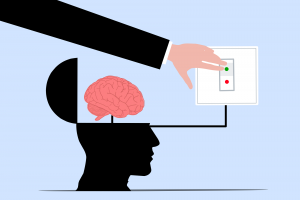
Some medical interventions have the potential to interfere with patients’ future healthcare decision-making. We identify two types of such influences: affecting whether a patient has decision-making capacity in the first place; and influencing which treatment option a patient ends up selecting. Using the example of deep brain stimulation, we argue that one should utilise this effect to obtain more authentic treatment preferences. In patients with implanted deep brain stimulators who do not meet the capacity threshold, the device state should be reverted as there is a chance that doing so has a positive effect on their capacity. In patients who are already deemed decision-competent, the same approach can reveal on/off-discrepancies in the selection of treatment choices. We propose five cross-checking strategies to deal with such discrepancies and call for a revision of current procedures for obtaining consent following any interventions whose psychotropic influences can be reversed within clinically reasonable time frames.
Does Brain-Decoding Technology Threaten Introspective Capabilities?
Introspecting subjects are widely believed to enjoy some form of epistemic privilege with regard to their mental states. While it is unclear if introspective knowledge is indeed infallible, our authority in the mental realm derives much of its force from the sheer absence of persuasive competing interpretations. With the advent of brain-decoding technology, such competition is now being introduced. While the literature sees the danger of decoding mental states in their revelation to third parties, I argue that divulging them to the subjects themselves is equally problematic: in addition to the introspective viewpoint, subjects will henceforth take on a third-personal, supposedly objective perspective on the same mental events that they are simultaneously observing from the inside. I shall analyse what it means to let oneself in via another route and explore the psychological effects that the ensuing confrontation is likely to have on our perceived introspective authority.
Personality Changes After Deep Brain Stimulation?
Zuk et al. (2023) examined researchers’ views on how deep brain stimulation may impact patients’ personality, mood, and behaviour (PMB). The team found that experts vary substantially in the notion of personality they employ. However, despite noting the lack of conceptual precision, no attempt was made at scientifically defining any of the involved concepts, so that the results of the different interviews remain largely incommensurable.
In this comment, I am doing the interpretative work that the authors should have undertaken following the descriptive part of the paper: first, disentangling the PMB cluster by defining what exactly constitutes personality, mood, and behaviour; and secondly, conceptualising the notion of personality change. I am arguing that what sets personality changes apart from other modifications is diachronic persistence.
The History and Future of Mind Control
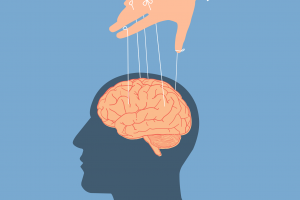
During the Cold-War era, intelligence agencies in both the Eastern and Western blocs set up secret experiments to devise methods of mind control and brainwashing in order to gain an advantage over the enemy. The most notorious of the these endeavours was the CIA’s illegal MKUltra programme, which ran from from 1953 to 1973. In its quest for a truth serum that could be employed to force confessions from subjects who are not cooperating and the desire to be able to manipulate people’s behaviour, the CIA experimented on thousands of subjects – partly without their knowledge or consent and often with disastrous consequences. In this paper, I scrutinise the MKUltra programme, investigating some of the experiments that it comprised. I also map the programme’s aims onto the latest technology available for interfering with the brain – so-called brain-computer interfaces – to determine whether one could, in principle, use these novel devices for the purpose of mind control. Finally, I am looking for indications that stakeholders may actually plan to employ the technology to achieve what had been beyond technological reach during the Cold War. I conclude that brain-computer interfaces could indeed be used to realise some of the original goals; and that an interest in mind control still prevails.
Stimulating the Brain Stem to Wake People from Coma?

Lockean views of personal identity maintain that we are essentially persons who persist diachronically by virtue of being psychologically continuous with our former selves. In this article, I present a novel objection to this variant of psychological accounts, which is based on neurophysiological characteristics of the brain. While the mental states that constitute said psychological continuity reside in the cerebral hemispheres, so that for the former to persist only the upper brain must remain intact, being conscious additionally requires that a structure originating in the brainstem – the ascending reticular activating system – be functional. Hence, there can be situations in which even small brainstem lesions render individuals irreversibly comatose and thus forever preclude access to their mental states, while the neural correlates of the states themselves are retained. In these situations, Lockeans are forced to regard as fulfilled their criterion of diachronic persistence since psychological continuity, as they construe it, is not disrupted. Deeming an entity that is never again going to have any mental experiences to be a person, however, is an untenable position for a psychological account to adopt. In their current form, Lockean views of personal identity are therefore incompatible with human neurophysiology.